Catalytic Converter Clog vs O2 Sensor: How to Tell the Difference
- Engine
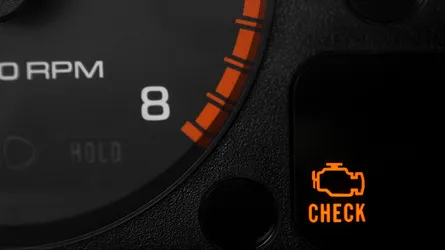
A check engine light comes on, your car feels sluggish, and fuel economy has dropped. You pull the OBD-II codes and see something related to the catalytic converter or oxygen sensors. Now the question is whether you are dealing with a clogged catalytic converter, a failing O2 sensor, or both. These two problems share many of the same symptoms, which is why they are so often misdiagnosed. Replacing the wrong part wastes hundreds or even thousands of dollars.
The catalytic converter and oxygen sensors work together as part of the emissions control system. O2 sensors monitor exhaust gas oxygen content and send voltage signals to the engine control module (ECM), which adjusts the air-fuel ratio for optimal combustion and catalytic converter efficiency. When either component fails, the other is affected, making accurate diagnosis essential before opening your wallet.
A clogged catalytic converter restricts exhaust flow and causes power loss that worsens with engine speed, while a bad O2 sensor sends incorrect readings to the ECM and causes poor fuel economy and rough running at all speeds. The fastest way to tell them apart is a back-pressure test on the catalytic converter (should read under 1.5 PSI at idle) combined with an O2 sensor waveform test using a scan tool with live data. Use the OBD-II error code lookup to decode your specific trouble codes and the fuel trim interpreter to check fuel trim values.
How the Catalytic Converter and O2 Sensors Work Together
Understanding the Emissions System
Your vehicle has two types of oxygen sensors: upstream (before the catalytic converter) and downstream (after the catalytic converter). The upstream O2 sensor (also called the pre-cat sensor or Sensor 1) reads exhaust gas composition directly from the engine and tells the ECM to adjust the air-fuel mixture. The downstream O2 sensor (post-cat sensor or Sensor 2) monitors how well the catalytic converter is cleaning the exhaust.
The catalytic converter sits between these sensors in the exhaust system. It contains a ceramic honeycomb structure coated with precious metals (platinum, palladium, and rhodium) that trigger chemical reactions converting harmful gases (carbon monoxide, hydrocarbons, and nitrogen oxides) into less harmful emissions (carbon dioxide, water vapor, and nitrogen). When the converter is working properly, the downstream O2 sensor reading should be relatively steady compared to the rapidly switching upstream sensor. When the converter fails or clogs, both sensor readings start to look similar, triggering a catalyst efficiency code.
Symptoms Comparison: Clogged Converter vs Bad O2 Sensor
Both problems trigger the check engine light and affect engine performance, but the specific symptoms differ in important ways. Understanding these differences helps you narrow down the cause before running diagnostic tests.
Clogged Catalytic Converter Symptoms
-
Progressive power loss: The engine feels increasingly sluggish as RPM rises. You may notice the car accelerates fine at low speeds but bogs down or hesitates badly at highway speeds or when climbing hills. This happens because exhaust gases cannot escape fast enough through the restricted converter, creating back-pressure that chokes the engine.
-
Rotten egg smell: A strong sulfur or rotten egg odor from the exhaust indicates the converter is not processing hydrogen sulfide properly. This smell is one of the most distinctive signs of a failing catalytic converter and is rarely caused by O2 sensor problems alone.
-
Heat buildup under the car: A clogged converter traps heat. You may notice excessive heat radiating from underneath the vehicle, especially near the center where the converter sits. In severe cases, the converter housing can glow red-hot, which is a fire hazard if you park over dry grass or leaves.
-
Failed emissions test: High hydrocarbon (HC) and carbon monoxide (CO) readings at the tailpipe, even when the engine is running well otherwise, point to a converter that cannot process exhaust gases efficiently.
-
Engine stalling under load: In severe cases, the back-pressure from a blocked converter can cause the engine to stall when you try to accelerate hard, especially from a stop or when merging onto a highway.
Bad O2 Sensor Symptoms
-
Poor fuel economy: A faulty O2 sensor sends incorrect voltage signals to the ECM, causing it to inject too much or too little fuel. You may see a 15-40% drop in miles per gallon (MPG) without any obvious change in driving habits. This is often the first and most noticeable symptom.
-
Rough idle: The engine runs unevenly at idle because the ECM is constantly adjusting the air-fuel mixture based on bad sensor data. You may feel vibrations through the steering wheel or seat, or hear the engine RPM fluctuate up and down.
-
Black exhaust smoke: If the O2 sensor is stuck reading lean (low voltage), the ECM adds extra fuel, creating a rich condition that produces visible black smoke from the tailpipe. You may also notice a strong gasoline smell.
-
Consistent performance at all speeds: Unlike a clogged converter, a bad O2 sensor causes problems that are relatively consistent whether you are idling, cruising, or accelerating. The issue is in the sensor signal, not in exhaust flow restriction.
-
Hesitation or surging: The engine may hesitate during acceleration or surge at steady throttle as the ECM hunts for the correct fuel mixture based on inaccurate oxygen readings.
OBD-II Codes: What They Tell You
Diagnostic trouble codes (DTCs) are your starting point, but they do not always point directly to the failed part. A code related to the catalytic converter can be caused by a bad O2 sensor, and O2 sensor codes can be triggered by a clogged converter. Use the OBD-II error code lookup to decode your specific codes, then use the information below to understand what they actually mean.
Catalytic Converter Related Codes
-
P0420: Catalyst System Efficiency Below Threshold (Bank 1). This is the most common catalytic converter code. It means the downstream O2 sensor is detecting that the converter is not cleaning exhaust gases efficiently. However, this code can also be triggered by a faulty downstream O2 sensor, exhaust leaks before the downstream sensor, or engine misfires sending unburned fuel into the converter.
-
P0430: Catalyst System Efficiency Below Threshold (Bank 2). Same as P0420 but for the other cylinder bank on V6 and V8 engines. If you see both P0420 and P0430 together, the problem is more likely an upstream issue (bad fuel, misfires, or O2 sensor) affecting both converters rather than two converters failing simultaneously.
-
P0421 / P0431: Warm-Up Catalyst Efficiency Below Threshold. Similar to P0420/P0430 but specifically related to the warm-up phase. The converter is not reaching operating efficiency quickly enough after a cold start.
O2 Sensor Related Codes
-
P0130-P0167: Oxygen sensor circuit codes covering both banks and all sensor positions. These codes indicate electrical problems with the sensor itself, such as open circuits, short circuits, or heater circuit failures. These almost always point to a bad O2 sensor rather than a converter problem.
-
P0130: O2 Sensor Circuit Malfunction (Bank 1, Sensor 1). The upstream sensor on Bank 1 has an electrical fault. This directly affects fuel trim calculations and can cause the engine to run rich or lean.
-
P0136: O2 Sensor Circuit Malfunction (Bank 1, Sensor 2). The downstream sensor on Bank 1 has an electrical fault. This sensor monitors converter efficiency, so a faulty reading here can falsely trigger P0420.
-
P0141: O2 Sensor Heater Circuit Malfunction (Bank 1, Sensor 2). The heater element inside the downstream O2 sensor has failed. O2 sensors need to reach 600 degrees Fahrenheit to work accurately. Without the heater, the sensor takes too long to warm up and gives inaccurate readings during the warm-up period.
Pro Tip: Read All Codes Before Diagnosing
Clear your codes, drive the vehicle for 50-100 miles through a mix of city and highway driving (at least 2-3 drive cycles), then re-scan. Codes that return immediately point to active faults. If you see misfire codes (P0300-P0308) alongside P0420, fix the misfires first. Unburned fuel from misfires damages the catalytic converter and causes false catalyst efficiency codes. Many P0420 codes disappear after fixing the underlying misfire problem. Check the misfire code helper to map cylinder-specific codes to your engine layout.
Diagnostic Tests: Confirming the Problem
Once you have pulled your codes and noted your symptoms, these tests will help you confirm whether the catalytic converter, O2 sensor, or both are the actual problem.
Test 1: Exhaust Back-Pressure Test (Catalytic Converter)
This is the most reliable test for a clogged catalytic converter. You need a back-pressure gauge (available at auto parts stores for $20-40) or a standard low-pressure gauge with a fitting for the upstream O2 sensor bung.
-
Remove the upstream O2 sensor (before the catalytic converter) using an O2 sensor socket (22mm or 7/8 inch).
-
Thread the back-pressure gauge adapter into the O2 sensor bung.
-
Start the engine and let it reach normal operating temperature.
-
Read the gauge at idle: a healthy converter should read under 1.5 PSI (pounds per square inch). Anything over 1.5 PSI at idle indicates restriction.
-
Have someone hold the RPM at 2,500 while you read the gauge. Pressure should stay under 3 PSI. Readings above 3 PSI confirm a clogged converter.
-
Snap the throttle open quickly. Pressure should spike briefly then drop. If it spikes above 5 PSI or stays elevated, the converter is severely blocked.
Test 2: Temperature Test (Catalytic Converter)
A working catalytic converter generates heat as it processes exhaust gases through chemical reactions. Use an infrared thermometer (temperature gun) to measure temperatures at the converter inlet and outlet.
-
Warm the engine to normal operating temperature and let it idle for 5 minutes.
-
Point the infrared thermometer at the exhaust pipe just before the catalytic converter (inlet). Note the temperature.
-
Point the thermometer at the exhaust pipe just after the converter (outlet). Note the temperature.
-
The outlet should be 50-100 degrees Fahrenheit hotter than the inlet. This temperature rise confirms the converter is actively processing exhaust and working.
-
If the outlet is the same temperature or cooler than the inlet, the converter is not functioning. If both temperatures are extremely high (over 1,000 degrees Fahrenheit), the converter may be partially clogged and overheating.
Test 3: O2 Sensor Live Data (O2 Sensor)
You need a scan tool with live data capability (basic Bluetooth OBD-II adapters with apps like Torque Pro, OBD Fusion, or a professional-grade scan tool) to watch O2 sensor voltage in real time.
-
Connect your scan tool and select live data. Find the O2 sensor voltage readings for both upstream (Sensor 1) and downstream (Sensor 2) sensors.
-
With the engine warmed up and running at idle, watch the upstream O2 sensor voltage. A healthy upstream sensor should switch rapidly between approximately 0.1V (lean) and 0.9V (rich), crossing 0.45V several times per second. This constant switching shows the ECM is actively adjusting the air-fuel mixture.
-
If the upstream sensor voltage is stuck at one value (frozen high or frozen low), slow to respond (taking more than 1 second to switch), or showing a flat line with no switching, the upstream O2 sensor is bad.
-
Watch the downstream O2 sensor voltage. A healthy downstream sensor behind a good converter should show a relatively steady voltage around 0.45-0.65V with gentle, slow fluctuations. This steady reading confirms the converter is smoothing out the exhaust gas composition.
-
If the downstream sensor mirrors the upstream sensor (rapid switching between 0.1V and 0.9V), the catalytic converter has lost efficiency. The converter is no longer cleaning the exhaust, so the downstream sensor sees the same fluctuations as the upstream sensor. This triggers P0420/P0430 codes.
Test 4: Fuel Trim Analysis (Both)
Fuel trims reveal how much the ECM is adjusting fuel delivery to compensate for problems. Use the fuel trim interpreter to analyze your readings.
-
Short-term fuel trim (STFT): Real-time adjustments the ECM makes based on upstream O2 sensor readings. Normal range is plus or minus 10%.
-
Long-term fuel trim (LTFT): Learned adjustments built up over time. Normal range is plus or minus 10%.
-
Bad O2 sensor clue: If fuel trims are significantly off (over plus or minus 20%) and do not respond when you create a known lean or rich condition (like pulling a vacuum hose), the upstream O2 sensor is likely stuck or sluggish and the ECM cannot adjust properly.
-
Clogged converter clue: If fuel trims are relatively normal (within plus or minus 10%) but you still have P0420 and power loss at higher RPM, the converter is likely clogged. The upstream O2 sensor and fuel control are working, but the converter itself is physically blocked.
Common Misdiagnosis Scenarios
Avoid These Costly Mistakes
Misdiagnosing these problems is extremely common and expensive. Here are the scenarios that catch most people.
Replacing the Converter When the O2 Sensor Is Bad
This is the most expensive misdiagnosis. A shop sees P0420 and recommends a new catalytic converter ($500-2,500 installed). But P0420 can be caused by a $50-150 downstream O2 sensor that is sluggish or reading incorrectly. Always test the downstream O2 sensor response time and voltage pattern before condemning the converter. If the downstream sensor is slow to switch or shows erratic voltage, replace the sensor first, clear the codes, and retest after 100 miles of driving.
Replacing O2 Sensors When the Converter Is Failing
A failing converter can make O2 sensor readings look abnormal. If the converter is breaking apart internally, debris can contaminate the downstream O2 sensor, causing it to read incorrectly. Replacing the sensor without fixing the converter means the new sensor will fail quickly too. Always check for converter rattling sounds (loose substrate) and run the back-pressure and temperature tests before replacing sensors.
Ignoring Upstream Problems
Both the catalytic converter and O2 sensors can be damaged by problems elsewhere in the engine. Persistent misfires send unburned fuel into the converter, overheating and destroying it. Oil burning from worn valve seals or piston rings coats O2 sensors and converter substrates with deposits. Coolant leaks from a blown head gasket contaminate both components. Always fix engine problems first before replacing emissions components, or you will just damage the new parts.
Money-Saving Tip: If your car has over 100,000 miles and you need to replace the catalytic converter, replace both upstream and downstream O2 sensors at the same time. Old sensors with heat-damaged elements often trigger new codes within months of a converter replacement, requiring another round of diagnosis and labor charges. The sensors cost $50-150 each and take minimal extra time to install while the exhaust is already being worked on.
Repair Costs: What to Expect
Repair Parts Cost Labor Cost Total Estimate
Upstream O2 sensor replacement $50-150 $50-150 $100-300
Downstream O2 sensor replacement $50-150 $50-150 $100-300
Both O2 sensors (same bank) $100-300 $75-200 $175-500
Aftermarket catalytic converter $150-500 $100-300 $250-800
OEM catalytic converter $500-2,000 $100-300 $600-2,300
Converter + both O2 sensors $300-2,300 $150-400 $450-2,700
Important: Catalytic Converter Regulations
Catalytic converter replacement is regulated by federal and state laws. In California and states that follow California emissions standards (CARB states), you must install a CARB-compliant converter that is approved for your specific vehicle year, make, model, and engine. Federal EPA regulations require converters to meet minimum performance standards. Installing the wrong converter or removing a converter is illegal and can result in fines up to $5,000 per violation. Tampering with emissions equipment also voids your vehicle warranty coverage for emissions-related components. Always verify that the replacement converter is legal for your vehicle and state before purchasing.
Can You Drive with These Problems?
Driving with a Bad O2 Sensor
A failed O2 sensor does not create an immediate safety hazard, but it should not be ignored for long. The engine will run in a degraded mode with poor fuel economy and higher emissions. A bad upstream sensor causes the ECM to use default fuel maps instead of real-time adjustment, which wastes fuel and can run the engine too rich. Running rich for extended periods sends excess unburned fuel into the catalytic converter, which can overheat and damage a perfectly good converter. A bad downstream sensor does not affect engine performance directly but will keep the check engine light on, masking other potential problems.
Driving with a Clogged Catalytic Converter
A partially clogged converter reduces performance but the car can usually still be driven at lower speeds. A severely clogged converter is more serious. The extreme back-pressure can cause the engine to overheat, stall at highway speeds, or lose power suddenly when you need it most (merging, passing, climbing hills). In worst-case scenarios, a converter that overheats to glowing-red temperatures can ignite undercoating, heat shields, or flammable materials beneath the vehicle. If you notice significant power loss, excessive heat underneath, or the rotten egg smell is strong, limit driving to getting the vehicle to a repair shop.
Prevention: Protecting Your Converter and O2 Sensors
Keep Both Components Healthy
Fix engine problems promptly: Misfires, oil burning, and coolant leaks are the top killers of catalytic converters and O2 sensors. A single misfiring cylinder can overheat and destroy a $1,500 converter in just a few hundred miles of driving. Address check engine lights, rough running, and fluid consumption immediately.
Use quality fuel: Top Tier gasoline brands (Shell, Chevron, Exxon, BP, Costco) contain higher levels of detergent additives that keep fuel injectors clean and prevent carbon buildup. Clean injectors mean complete combustion, which means less unburned fuel reaching the converter. Avoid discount fuel from stations without brand affiliation.
Avoid short trips when possible: Short drives (under 10 minutes) do not allow the catalytic converter to reach full operating temperature (500-1,200 degrees Fahrenheit). Without reaching temperature, the converter cannot fully burn off contaminants and moisture. Occasional longer highway drives help keep the converter clean through a natural thermal cleaning process.
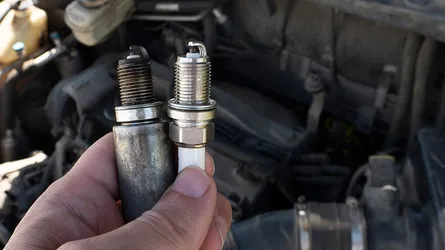
Follow the maintenance schedule: Regular spark plug replacement, air filter changes, and fuel system service prevent the conditions that damage converters and sensors. A well-tuned engine with proper combustion is the best protection for your entire emissions system.
When to Call a Professional
Know Your Limits
While O2 sensor replacement is a straightforward DIY job on most vehicles (just unscrew the old sensor and thread in the new one), catalytic converter work often requires professional equipment and expertise.
Seek Professional Help When:
-
The converter is welded into the exhaust: Many modern vehicles have converters that are welded (not bolted) to the exhaust system, requiring cutting and welding equipment for replacement.
-
You live in a CARB state: California and CARB-following states have strict converter requirements. A shop experienced with emissions regulations can ensure you get the right converter that will pass inspection.
-
Multiple codes are present: If you have converter codes alongside misfire codes, fuel system codes, or multiple O2 sensor codes, a professional can diagnose the root cause and avoid the expensive trial-and-error approach.
-
The converter is rattling: Internal substrate breakdown cannot be fixed. The converter needs replacement, and a shop can inspect for upstream causes that destroyed the original converter.
-
You are unsure about the diagnosis: At $500-2,500 for a converter replacement, this is not a part you want to guess on. A professional diagnostic session ($100-150) can confirm the problem before committing to expensive repairs.
Conclusion
Key Takeaways
-
Clogged converter symptoms are load-dependent: Power loss gets worse at higher RPMs and under heavy acceleration. Look for rotten egg smell, excessive heat under the vehicle, and engine stalling under load. Back-pressure test and temperature test confirm the diagnosis.
-
Bad O2 sensor symptoms are consistent: Poor fuel economy, rough idle, and hesitation happen at all engine speeds. Watch for black exhaust smoke and check fuel trim values. Live data O2 sensor voltage patterns confirm whether the sensor is switching properly.
-
P0420 does not always mean bad converter: This code can be caused by a sluggish downstream O2 sensor, exhaust leaks, or engine misfires. Always test both the converter and O2 sensors before replacing anything.
-
Fix upstream problems first: Misfires, oil consumption, and coolant leaks destroy both converters and sensors. Replacing emissions components without fixing the root cause wastes money on parts that will fail again.
-
Replace O2 sensors with the converter: If the converter needs replacement on a high-mileage vehicle, install new O2 sensors at the same time to prevent repeat diagnostic visits.
Telling the difference between a clogged catalytic converter and a bad O2 sensor requires looking beyond the OBD-II codes to actual test results and symptom patterns. The back-pressure test, temperature test, and live O2 sensor data together give you a clear picture of which component has failed. Taking the time to diagnose properly saves you from the most common and expensive mistake in emissions repair: replacing a $1,500 converter when a $100 sensor was the real problem.
A clogged catalytic converter is one of the most common reasons an engine won’t rev past 4000 RPM, since exhaust back-pressure builds rapidly at higher engine speeds. If your engine is also losing power under load, see engine loses power at full throttle. For misfire-related symptoms that can damage converters, read diagnose engine misfires. If your car struggles to maintain speed, check car won’t accelerate past 40 mph. For broader engine health concerns, review early warning signs your car engine is going bad.