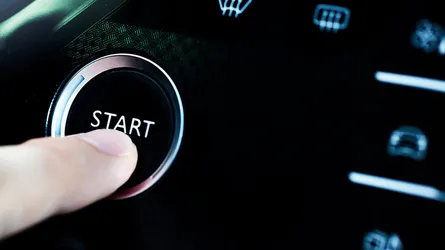
Car Won't Start But Battery Is Good: Causes and Solutions
Use the sound and cranking behavior to check battery connections, starter control, fuel delivery, ignition, and security-system faults.
Read the guideSymptom-Based Help
Car diagnostic guides help you move from a symptom to the checks most likely to reveal its cause. Choose the problem that best matches what your car is doing, then work through the steps in order.
Start with simple observations and safe checks. If a guide calls for special tools, advanced testing, or work you cannot do safely, take those findings to a qualified repair shop.
Starting and Battery
Start here when the engine will not start, the starter only clicks, or the battery keeps going flat.
Use the sound and cranking behavior to check battery connections, starter control, fuel delivery, ignition, and security-system faults.
Read the guideA single click can come from a weak battery, poor cable connection, failed starter, or locked engine. Follow a safe order to find the cause.
Read the guideStop repeat dead-battery problems by testing storage capacity, cable voltage drop, charging performance, and key-off current draw.
Read the guideIdle and Stalling
Use these checks when the idle is too high, too low, rough when cold, or the engine stops while driving.
Use the stall timing, stored codes, fuel trims, voltage, and transmission clues to find why an engine stops at idle and starts again.
Read the guideTrace cold-start shaking through stored codes, temperature data, intake leaks, ignition faults, fuel delivery, and compression tests.
Read the guideUse the stall pattern, warning lights, tachometer, voltage, fuel pressure, and stored codes to trace an intermittent engine shutdown.
Read the guideFind out when a fast idle is normal, what causes it to stay high, and which safe checks reveal air leaks or throttle faults.
Read the guideFind out why idle speed dips or surges, which clues separate air leaks from misfires, and what to test before replacing parts.
Read the guidePower, Lights, and Noises
Follow these guides for lost power, RPM limits, check engine light data, and sounds that appear under acceleration.
Match a sudden tachometer dip to fuel, ignition, voltage, throttle, transmission, or sensor tests before replacing parts.
Read the guideSee current U.S. warning-light repair costs, common fixes, regional averages, and the limits of CarMD's vehicle-health data.
Read the guideCompare engine RPM, warning lights, shift behavior, fuel pressure, airflow, boost, and exhaust flow to find the cause of limited speed.
Read the guideMatch squealing, knocking, clicking, whining, humming, and grinding to likely belt, engine, exhaust, transmission, axle, or wheel faults.
Read the guideLearn how to tell a normal stationary 4,000 RPM limit from reduced-power mode, fuel starvation, misfires, or airflow faults.
Read the guide